
Stepwise loss of complexity in hagfish eyes prior to deep sea colonization
Updated: Jun 16
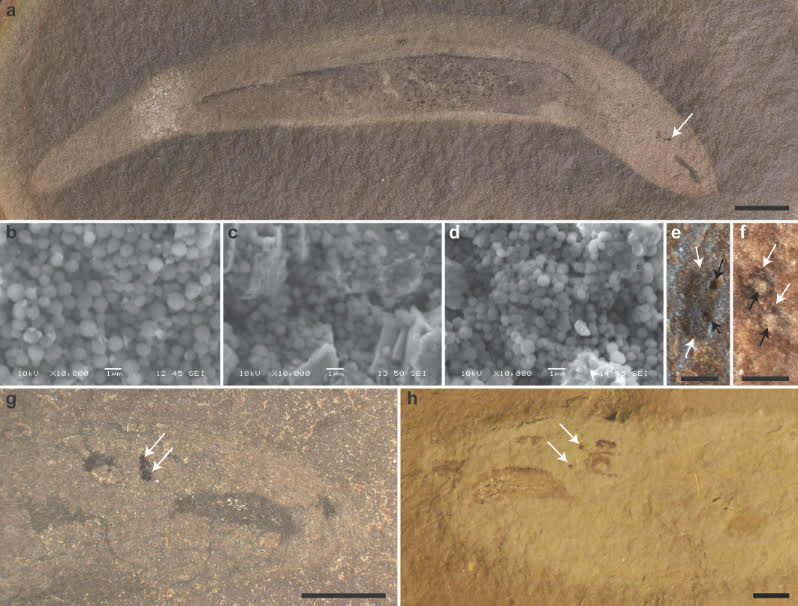
The Lauer Foundation was involved in a study of hagfish eyes with collaborators from the University of Wisconsin- Milwaukee, The Sandra and David Douglass Collection, Field Museum and the University of Ottawa published in the journal Biology Letters.
Abstract:
The hagfish eye is highly reduced, lacking pigment and a lens, and covered by soft tissue. The timing and mode of this loss of complexity remain unknown. Here, we present high-resolution anatomical data on the fossilized eyes of three stem hagfishes that form a transitional series towards the highly vestigialized eye of modern hagfishes. All have small eyes covered in soft tissue and containing only spherical melanosomes. Lenses are present in the more stemward hagfishes but absent in the more crownward hagfish. Reduction of the eyes occurred gradually across the Palaeozoic, with an initial stage of size reduction and loss of cylindrical melanosomes from the retinal pigmented epithelium, an intermediate stage with loss of image focus capability and finally a near-complete loss of vision (the hagfish crown group). The initial and intermediate stages of this process likely occurred in nearshore environments prior to the Permian colonization of the continental slope by hagfish.
Press Coverage:


Comments